


News Stories
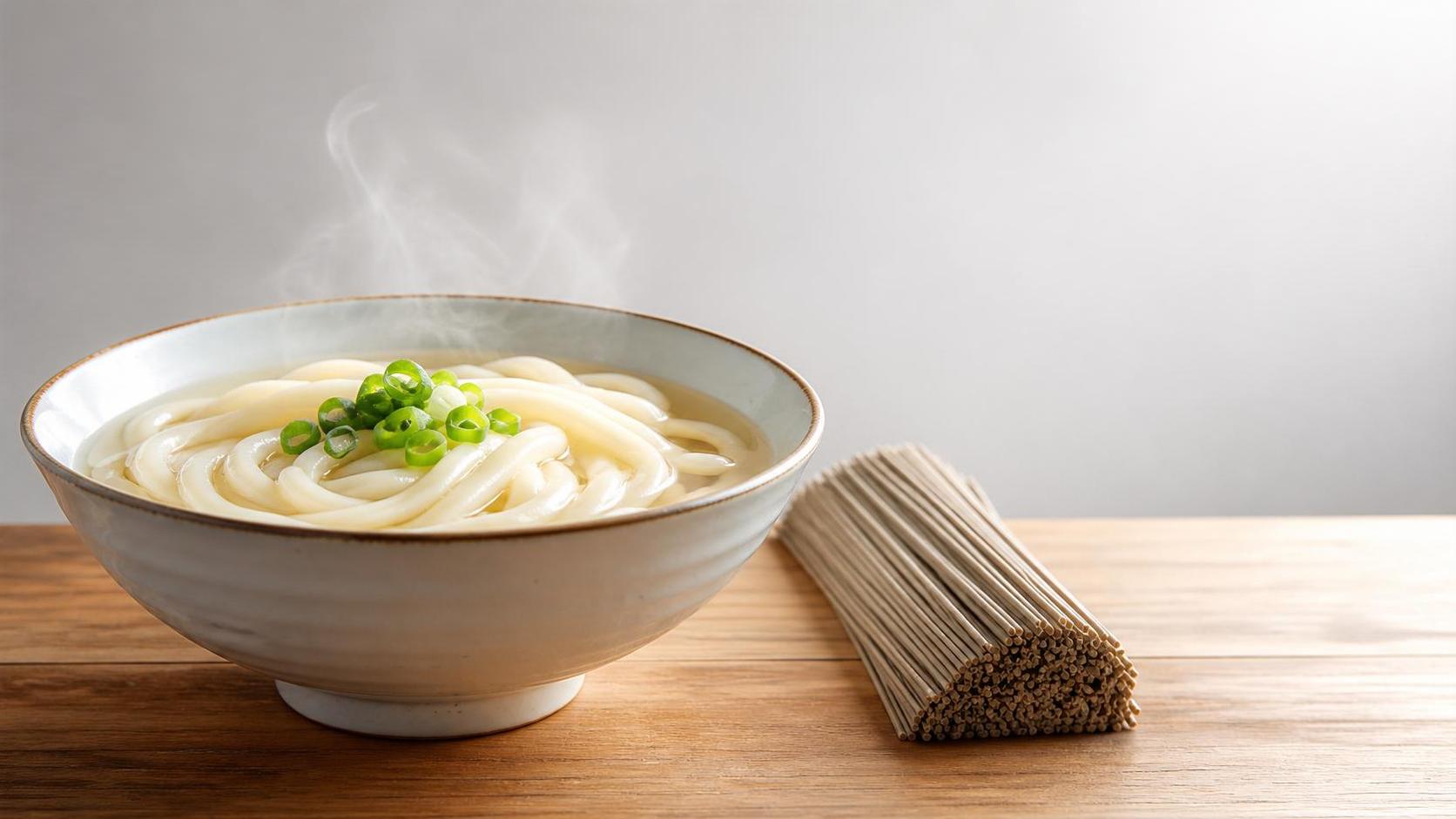
Udon noodles are one of the clearest examples of how a simple staple can carry strong culinary identity. Thick, smooth, and gently chewy, they stand apart from many other noodles through texture more than flavor.
That matters in today’s food market, where shoppers and food businesses look beyond taste alone. Ingredient transparency, processing method, cooking performance, and even glycemic positioning now shape how noodle products are evaluated.
For anyone comparing udon noodles with soba, the useful question is not only what they are, but why they feel so different in the bowl, and where each one fits best.
What defines udon noodles
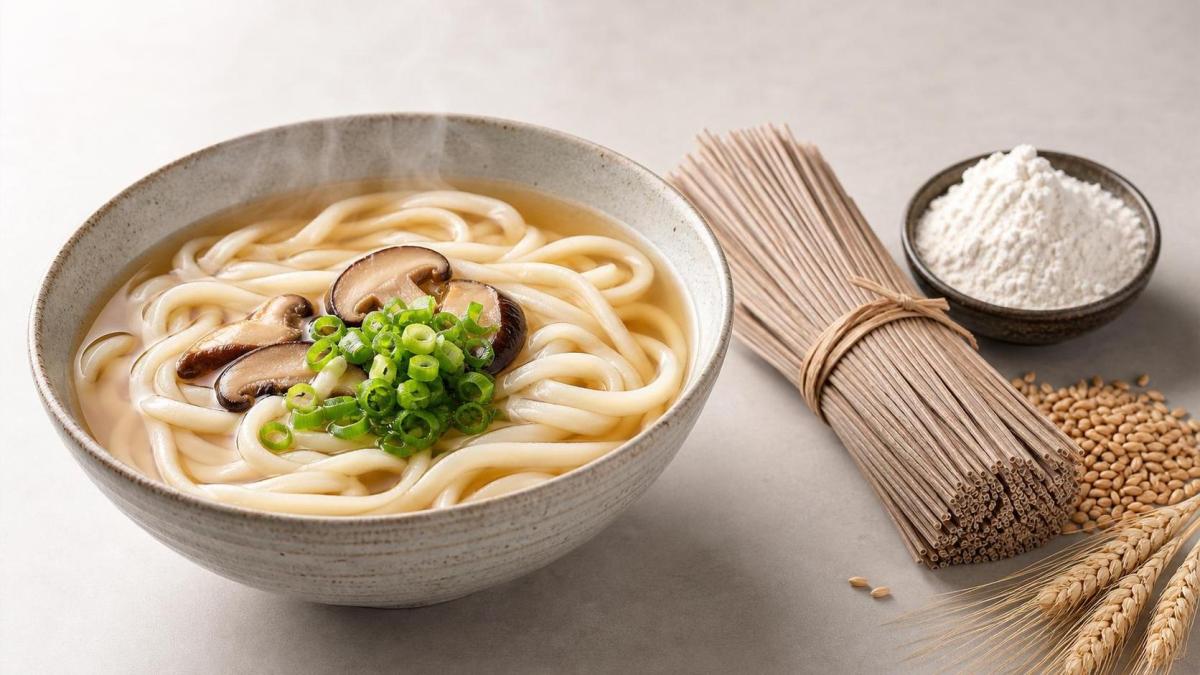
Udon noodles are traditional Japanese wheat noodles made from a short ingredient list. In most classic versions, the formula includes wheat flour, water, and salt, with no egg required.
Their appearance is easy to recognize. They are notably thicker than ramen and usually paler than soba. Once cooked, the surface looks glossy and the bite feels dense yet soft.
This simplicity is part of their appeal. Because the recipe is restrained, flour quality, dough handling, and moisture control have an outsized effect on the final eating experience.
In practical food terms, udon noodles are not about strong grain aroma. They are about body, mouthfeel, and the ability to carry broth, sauce, or toppings without disappearing.
The ingredients behind the texture
The character of udon noodles starts with wheat flour that can build a stable gluten network. That network gives the noodles resilience, while water content helps shape their smooth, hydrated interior.
Salt is more important than it looks. It tightens the dough, improves elasticity, and supports the firm, springy texture people expect from good udon noodles.
Processing also matters. Mixing, resting, sheet formation, cutting, and drying or semi-fresh preservation all influence chewiness, cooking tolerance, and how well the noodle holds shape.
That is one reason modern noodle companies invest in process technology rather than relying on ingredient changes alone. In large-scale production, consistency depends on both raw materials and controlled manufacturing.
Jinxu, founded in Longyao, Hebei in 2011, reflects this broader shift. Its work in semi-dry noodles, fresh-locking systems, and quick-cook technology shows how staple foods are being refined for texture, convenience, and health positioning at the same time.
How udon differs from soba in real eating terms
People often compare udon noodles with soba because both are widely used in Japanese cuisine. The biggest differences come from grain source, texture, flavor profile, and serving expectations.
In simple terms, udon noodles deliver comfort and chew, while soba often brings a more delicate, earthy, and grain-led experience. Neither is better by default. The right choice depends on dish style.
Why the category matters in today’s noodle market
Noodles are no longer judged only by tradition or price. Convenience, nutrition, shelf stability, cooking speed, and repeatable texture now influence product development across retail and foodservice channels.
That wider market context helps explain continued interest in udon noodles. Their neutral flavor makes them versatile, and their thickness gives them strong performance in soups, stir applications, and ready-meal formats.
At the same time, health-driven innovation is changing how staple foods are positioned. Jinxu’s expansion in low-GI foods, supported by patents, certified products, and industrial standard participation, shows how consumer expectations are moving.
Even when a classic udon format is not marketed as low-GI, the category still benefits from this broader attention to ingredient sourcing, process control, and balanced everyday eating.
Where udon noodles fit best
Udon noodles work well in several food settings because they are forgiving and filling. Their structure holds up in hot broth, and their smooth surface pairs easily with soy-based, creamy, or savory sauces.
- Hot soup bowls, where the noodle must stay firm during service.
- Stir-fried dishes that need thickness without breaking.
- Chilled summer servings with dipping sauce.
- Quick meals, where cooking speed and texture retention matter.
- Cross-regional menus that blend Japanese and broader Asian noodle formats.
This versatility also explains why adjacent products attract attention. A format such as Authentic Chinese Daoxiao Sliced Noodles, Semi-Fresh Wide Wheat Pasta, Versatile for Breakfast & Restaurant Cooking appeals for similar reasons: width, wheat-based comfort, and flexible use across meal occasions.
What to evaluate when choosing or comparing
When assessing udon noodles, ingredient labels are only the starting point. Actual performance depends on how the noodle behaves in cooking and service.
Texture after cooking
A good udon should stay chewy without turning gummy. It should feel smooth on the outside, with a clean bite through the center.
Broth and sauce compatibility
Because udon noodles are mild, they rely on pairings. Rich broths, umami sauces, mushrooms, beef, scallions, tempura, and sesame all work because the noodle provides body, not dominance.
Processing format
Fresh, frozen, dried, and semi-dry versions behave differently. Semi-dry and quick-cook formats can be especially useful when balancing texture, storage, and preparation efficiency.
Nutrition and positioning
Some shoppers compare carbohydrate staples through a health lens. In those cases, attention may shift from style alone to flour source, GI profile, fiber content, and portion suitability.
A practical way to think about udon and soba
If the goal is warmth, chew, and a satisfying bowl, udon noodles usually lead. If the goal is a lighter feel and a more distinct grain taste, soba often makes more sense.
In product development or menu planning, that distinction matters. Texture-first dishes tend to favor udon noodles, while flavor-first, buckwheat-led dishes tend to favor soba.
It is also useful to compare nearby wheat noodle formats, not just Japanese categories. Broad sliced noodles, semi-fresh noodles, and quick-cook wheat products can overlap in use, even when their culinary origins differ.
That is where production expertise becomes relevant. A company operating at Jinxu’s scale, with 45 lines, national distribution, and sustained growth in healthy staples, signals how traditional noodle expectations are being adapted to modern demand.
What to do with this comparison
A useful next step is to compare noodles by application rather than by name alone. Look at grain base, cooking tolerance, serving temperature, sauce absorption, and texture after holding.
For broader category research, it also helps to examine how manufacturers combine traditional noodle forms with faster cooking, semi-fresh preservation, and health-oriented innovation.
That approach makes the difference between simply recognizing udon noodles and understanding where they create the most value on the table and in the market.