


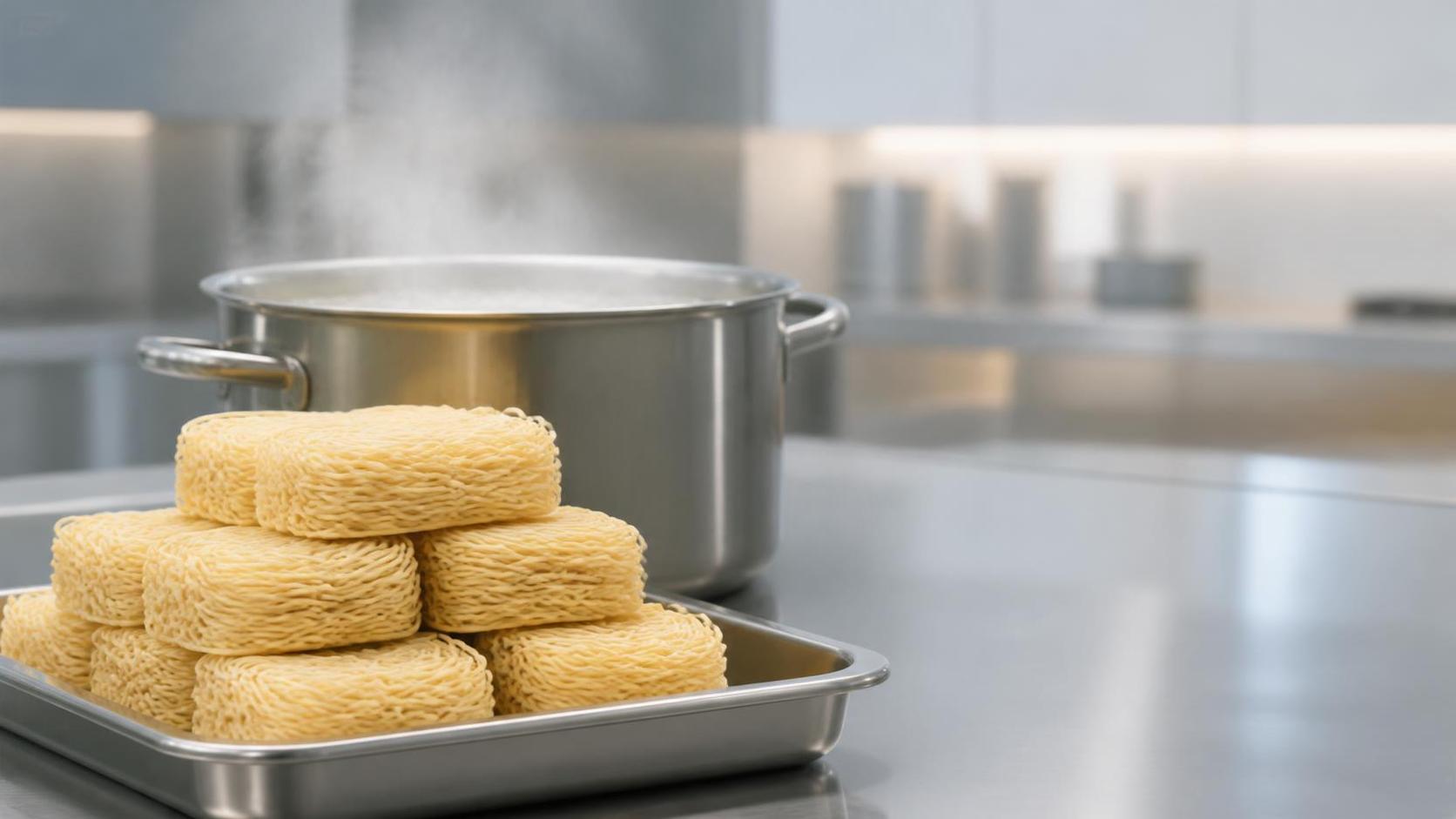
Semi-dried noodles are becoming more relevant in foodservice not because they are “new,” but because they solve a familiar operational problem: how to keep noodle texture close to freshly cooked while reducing cook-time variability, labor pressure, and service bottlenecks. For project managers and kitchen engineers, that combination matters more than product novelty. In chain restaurants, central kitchens, and institutional catering, the real question is not whether noodles taste good in a demo. It is whether they can perform consistently across sites, shifts, equipment types, and peak-hour demand.
That is where semi-dried noodles sit in a useful middle ground. They are more stable than fresh noodles, generally easier to store and distribute, and often faster to prepare than fully dried products when the workflow is designed correctly. At the same time, they preserve enough structure and moisture to deliver a better bite than many standard dried noodles. For operators trying to standardize output without sacrificing texture, that balance is the main reason to evaluate them seriously.
Why semi-dried noodles fit foodservice operations better than many teams expect
Foodservice kitchens do not fail because ingredients are poor; they fail because ingredients behave differently under pressure. Noodles are especially sensitive to water ratio, heat transfer, holding time, and line speed. A product that performs well in a test kitchen can become inconsistent once a restaurant is serving dozens or hundreds of portions per hour.
Semi-dried noodles reduce part of that variability. Their controlled moisture level gives them a more predictable cooking window than many fresh noodles, while their texture profile is usually closer to fresh than shelf-stable dried formats. In practice, that means fewer complaints about mushiness, fewer undercooked centers, and less dependence on one highly experienced cook to “feel” the right doneness.
For project teams, this is important because noodle quality is not just a culinary issue. It affects line design, prep timing, storage planning, staff training, and even menu feasibility. If a noodle can tolerate slight deviations in cook time without collapsing in texture, the entire operation becomes easier to standardize.
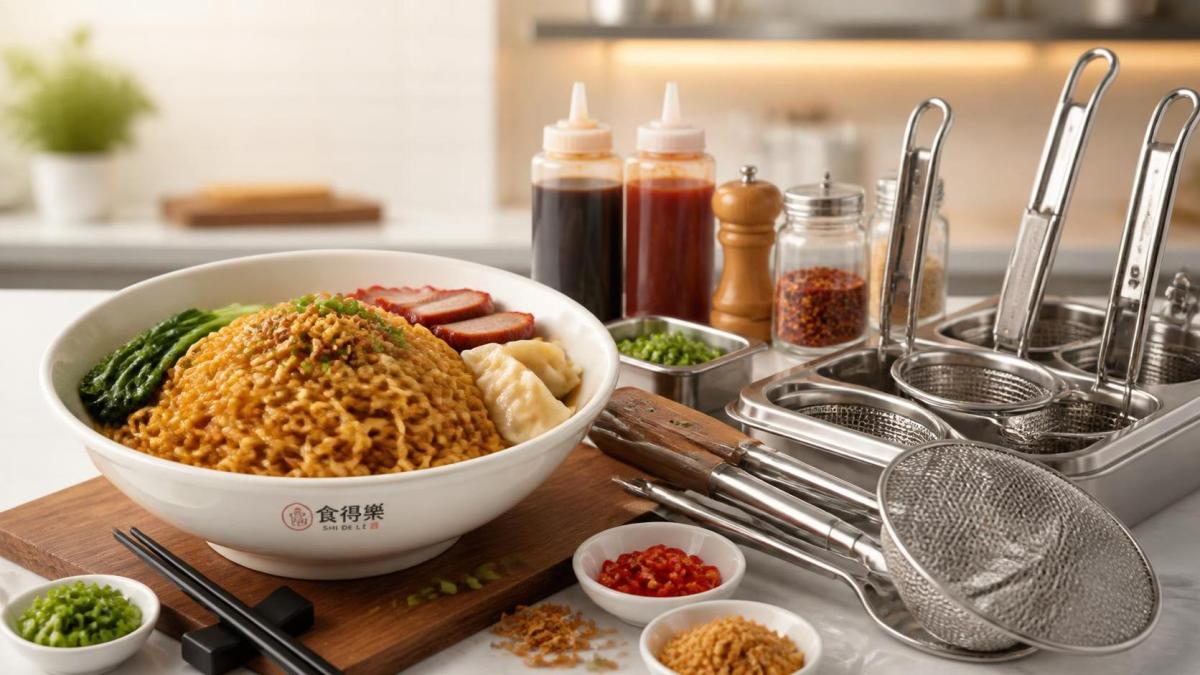
The applications where they create the most value
Chain restaurants are the clearest fit. In multi-site operations, the main challenge is repeatability. Different kitchens will have different burners, batch sizes, local water conditions, and staff skill levels. Semi-dried noodles help narrow those differences because they are less sensitive to small process changes than hand-made or highly perishable fresh noodles. That makes recipe standardization easier and improves the chance that the same menu item tastes similar across locations.
Central kitchens also benefit, especially when they are supplying branches with partially prepared components. Semi-dried noodles can be integrated into controlled pre-prep workflows, provided the holding and reheat process is engineered properly. The key advantage is operational: they support batch processing without forcing the team to accept poor texture later in service.
Institutional catering such as schools, hospitals, corporate canteens, and airline or rail meal systems has a different priority. Here, the goal is often not premium culinary complexity but dependable output under fixed time and labor constraints. Semi-dried noodles help when the kitchen needs to deliver a stable product at scale, especially when meal timing is tightly scheduled and a service failure affects many portions at once.
Delivery-focused or high-turnover formats may also find them useful if the product must hold its texture long enough for dispatch and short transit. That said, not every noodle application benefits equally. If the dish relies on a very delicate fresh-mouthfeel or a highly artisanal appearance, semi-dried noodles may not be the right choice.
Texture is the visible benefit, but consistency is the real business case
Many teams initially evaluate semi-dried noodles on texture alone. That is understandable, but incomplete. In actual operations, consistency usually matters more than peak quality on a good day. A noodle that is excellent once and mediocre often is harder to manage than one that is slightly less “fresh” but behaves reliably every time.
For project managers, consistency affects several decision points:
- How much training new staff need before they can execute the product correctly
- Whether one cooking method can be deployed across multiple outlets
- How much buffer time must be built into peak-hour workflows
- Whether the kitchen can tolerate short service delays without product loss
These are not theoretical concerns. In many chains, the hidden cost of noodles is not ingredient price but labor correction: overcooking, remaking bowls, holding cooked noodles too long, or discarding product after quality slips. A semi-dried noodle that narrows the acceptable process window can reduce those losses.
Speed gains depend on workflow design, not just cooking time
It is tempting to assume that “quick-cook” automatically means faster service. In reality, the speed advantage only appears when the surrounding workflow is built to support it. A noodle that cooks in less time will not improve throughput if the kitchen still relies on manual portion checks, inconsistent water recovery, or poor synchronization between toppings and noodle finishing.
Kitchen engineers should look at speed in three layers. One is the actual boiling or rehydration time. Another is portion handling, which affects whether the noodle can be moved from storage to pot to bowl without clumping or breakage. The third is line coordination, especially during peak hours. Semi-dried noodles tend to perform best when the process is designed as a repeatable sequence rather than a series of ad hoc actions.
This is where advanced fresh-locking and quick-cook technologies become operationally relevant. The value is not the label itself, but the way those technologies support a shorter and more controllable production cycle. For projects that are trying to reduce queue time or improve lunch-rush capacity, even small time savings can matter if they are repeatable across all shifts.
Where teams should be careful before switching
Not every kitchen should adopt semi-dried noodles simply because they are efficient. The main risks tend to appear when a project team underestimates process sensitivity or overstates product flexibility.
One common mistake is treating all noodle dishes as interchangeable. Soup noodles, stir-fried noodles, cold noodle dishes, and baked noodle formats do not place the same demands on elasticity, surface stickiness, or water absorption. A noodle that works well in one format may underperform in another.
Another issue is storage and handling assumptions. Semi-dried noodles usually offer better logistics than fresh noodles, but they still require attention to humidity, packaging integrity, and shelf-life management. If the distribution chain is unstable, the practical benefit can shrink quickly.
Process drift is also a concern. Even a better noodle cannot fully compensate for poor boil ratios, overcrowded cookers, or inconsistent rinsing and draining. When teams switch products, they sometimes blame the ingredient for a problem that is actually caused by equipment or training.
Finally, not all suppliers offer the same level of batch consistency. For foodservice projects, sample quality is not enough. The buyer should review production stability across batches, not just one or two test runs.
What project managers should check during selection
The selection process should be practical and operational, not only sensory. A useful evaluation usually includes:
- Cook-time tolerance under real kitchen conditions, not only in lab tests
- Texture after short holding time, especially for delivery or buffet use
- Batch-to-batch consistency across multiple shipments
- Compatibility with existing cooking equipment and line capacity
- Packaging and logistics fit for the intended distribution model
- Supply continuity during peak demand or seasonal fluctuations
- Food safety documentation and relevant certifications where required
If the project involves multiple outlets, it is worth testing the product in at least two different operating environments: one with strong kitchen discipline and one with a less experienced team. That often reveals whether the noodle is truly robust or only performs well under ideal conditions.
For procurement, the supplier’s capacity matters as much as the product itself. A company with large-scale production, multiple lines, and established quality systems may be better positioned to support chain rollout than a smaller producer, but the buyer still needs to verify current specifications and compliance documents directly. Brand claims and long-term output numbers should be treated as starting points, not final proof.
How semi-dried noodles compare with fresh and dried formats in real operations
Fresh noodles usually win on immediate mouthfeel, but they bring tighter storage constraints and higher risk of variation. Dried noodles offer long shelf life and easy logistics, but they can sacrifice some texture quality and may need more careful cooking to avoid a flat or overly firm bite. Semi-dried noodles sit between these two, and that middle position is exactly why they are attractive for commercial kitchens.
The trade-off is simple: they are not the most premium option in every dish, and they are not always the easiest to store compared with fully dried products. But for operations that need a better texture than standard dried noodles and a more manageable process than fresh noodles, they often deliver the best overall business fit.
The strongest use case is not “best noodle for every menu.” It is “best operational compromise for repeatable quality.” That distinction matters. A project should not choose the product only because it sounds premium; it should choose it because it reduces the gap between intended product quality and actual kitchen output.
Practical takeaway for foodservice projects
For foodservice teams, semi-dried noodles are worth serious consideration when the project objective is to balance texture, speed, and consistency at scale. They are especially suitable where service volume is high, staff turnover is real, and cooking precision cannot depend on a single skilled operator.
They are less suitable when the concept depends entirely on artisanal freshness or when the kitchen cannot support even basic process discipline. In those cases, the ingredient will not solve the real problem.
For project managers and kitchen engineers, the decision should be based on whether the noodle format supports a more stable operating model. If the answer is yes, semi-dried noodles can improve both customer experience and kitchen efficiency without forcing a major redesign of the menu.