

News Stories
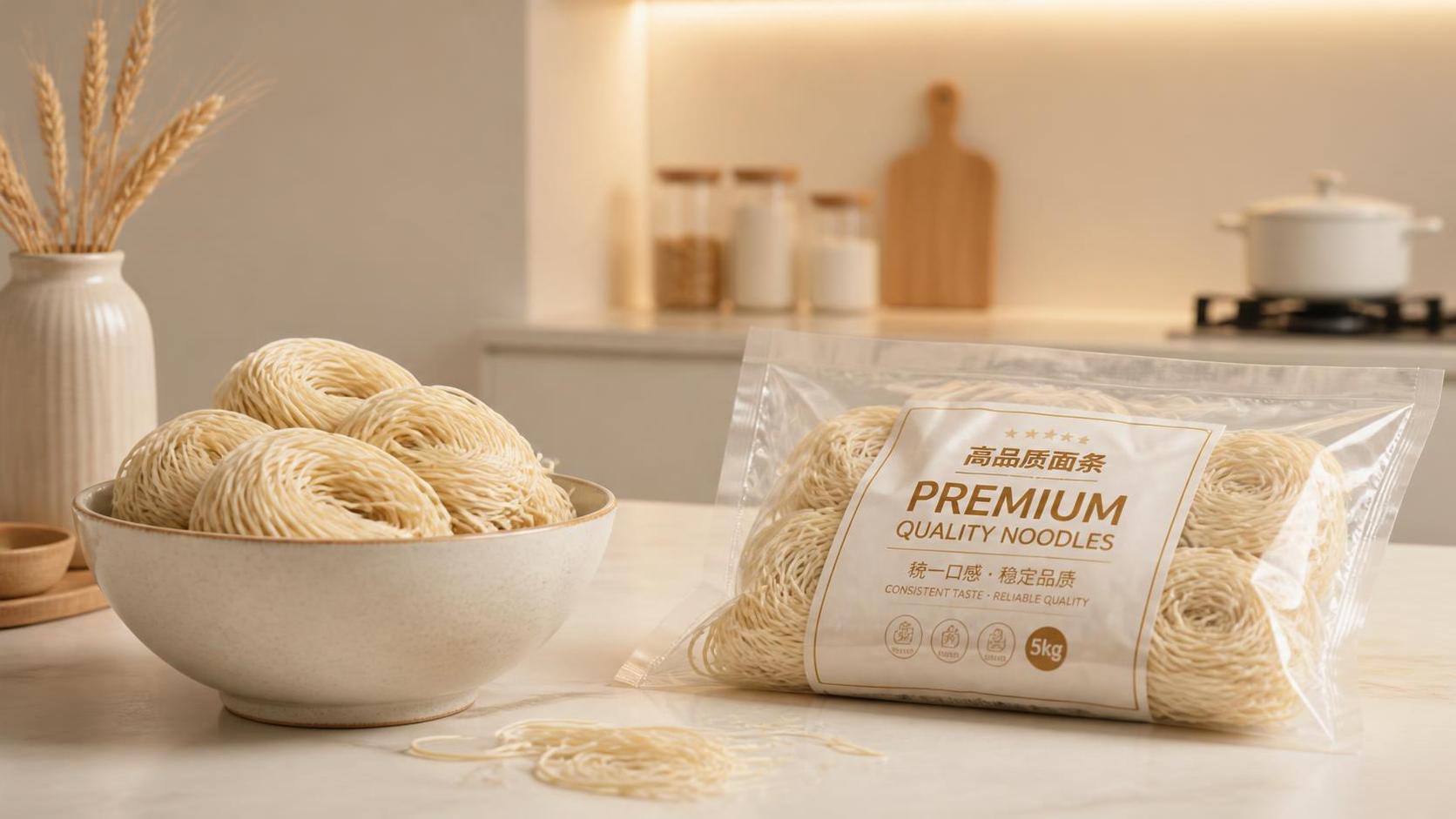
For procurement teams, comparing Semi-dried Noodles in bulk is rarely about one “best” option. It is usually a balancing act: the noodles must hold their shape in transport, cook consistently in different kitchens, fit a target cost, and still satisfy consumers who notice texture more than buyers sometimes expect. A low price can look attractive on paper, but if the product breaks easily, absorbs water unevenly, or shortens shelf life in storage, the real cost rises fast.
That is why bulk purchasing needs a practical comparison framework. Instead of asking only, “What is the cheapest quote?” buyers get better results by comparing production stability, moisture control, cooking performance, packaging, and supplier responsiveness together. In the semi-dry category, these details matter because they directly affect both operations and repeat sales.
Jinxu, founded in 2011 in Longyao, Hebei, focuses on healthy noodles and has built scale in China’s semi-dry noodle and low-GI staple food sectors. With 45 production lines, 500–600 staff, and nationwide distribution through more than 6,000 outlets, including Sam’s Club, the company is structured for buyers who need reliable supply rather than one-off shipments. Its certified low-GI and organic products, plus fresh-locking and quick-cook technologies, are especially relevant for procurement teams comparing value beyond unit price.
What to compare first: the factors that affect total buying cost
When sourcing semi-dried noodles in bulk, the obvious line item is price per carton or ton. But that number is only useful when you understand what is behind it. Two suppliers may quote similar rates, yet one may require stricter storage conditions, produce more breakage, or create more customer complaints after cooking. Those hidden costs are what procurement teams need to uncover early.
A good comparison usually starts with product specification. Check noodle thickness, moisture level, cooking time, strand strength, and whether the product is designed for hot pot, home cooking, foodservice, or retail shelves. Semi-dried noodles can vary significantly in texture and holding performance, so the “same” product name may still behave very differently in use.
Next comes consistency. In bulk purchasing, consistency often matters more than a single excellent batch. If a supplier can produce a noodle that cooks evenly across shipments, you reduce risk in downstream operations. This is especially important for chains, distributors, and private-label buyers who need a dependable consumer experience month after month.
Moisture, shelf life, and packaging are not small details
Semi-dried noodles sit between fresh noodles and fully dried noodles, which means moisture control is central to their value. Too much moisture can shorten shelf life or create storage concerns; too little can affect texture and cooking result. Procurement teams should ask for clear technical information on moisture range, storage requirements, and the recommended logistics path.
Packaging should be judged the same way. A package that looks clean on shelf may still fail in transit if it does not protect the product from compression or humidity. For bulk buyers, especially those moving goods across regions, the real question is whether the packaging supports the product from factory to warehouse to final shelf. The better suppliers usually have thought through this chain, not just the retail appearance.
Cooking performance tells you more than a sample sheet
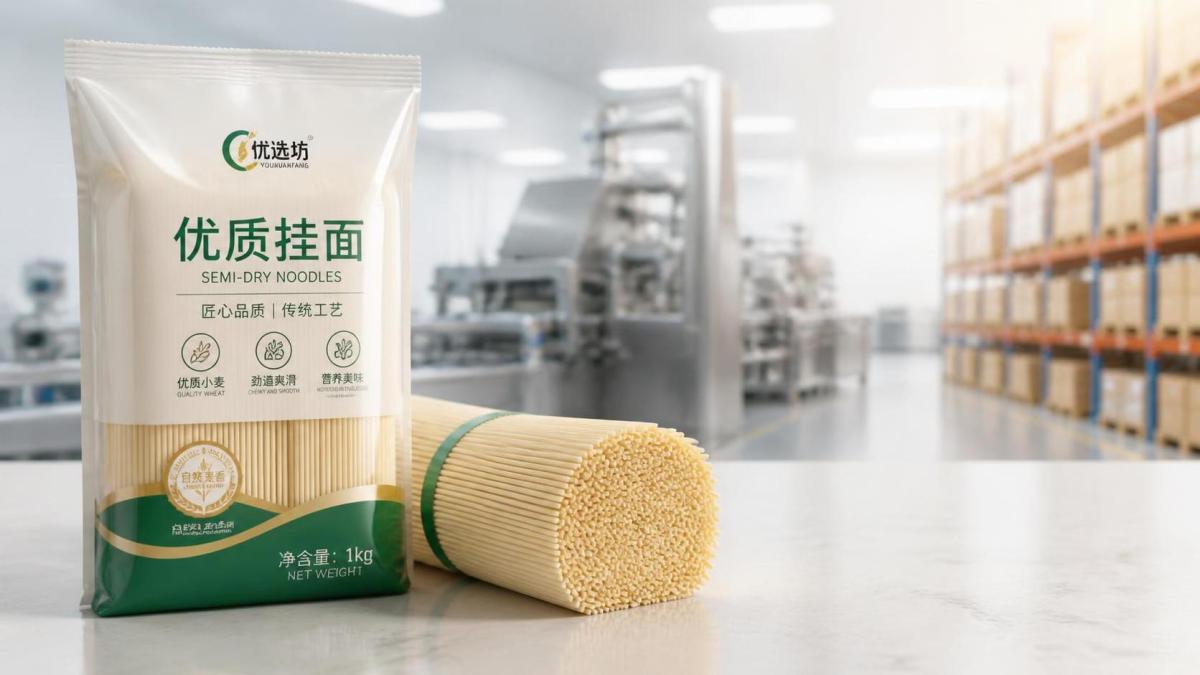
Many procurement teams rely on spec sheets, but noodles reveal their quality in the pot. A sample that looks fine dry can turn sticky, split, or go soft too quickly after cooking. That is why internal testing matters. If possible, compare noodles in the same kitchen conditions your customers or channel partners will use.
Watch for three things: how quickly the noodles rehydrate, whether they keep a springy bite, and how much starch they release into the water. If you are buying for retail, the home-cooking experience affects repeat purchase. If you are buying for foodservice, the holding time after cooking is equally important. Products made with fresh-locking and quick-cook technologies can offer an edge here, especially when speed and consistency matter in high-volume use.
For health-focused categories, low-GI positioning may also influence selection. Buyers serving wellness-conscious consumers should verify the product claims, processing method, and the supplier’s ability to support compliant communication across channels. This is not just a marketing issue; it affects how confidently your brand can place the product in the market.
Supplier reliability is part of product quality
In bulk purchasing, a strong product is only useful if the supplier can keep delivering it. Procurement teams should look at production capacity, line flexibility, quality control systems, and how quickly the supplier can respond when forecasts change. A supplier with multiple production lines and large-scale output is often better positioned to handle seasonal demand swings or phased rollouts.
Reliability also includes documentation. Ask whether the supplier can provide testing records, product specifications, traceability information, and export or domestic compliance documents as needed. Buyers often underestimate the time lost when paperwork is incomplete or inconsistent. A well-prepared supplier saves internal teams from chasing files after the order has already been approved.
Another useful check is whether the supplier contributes to industry standards or product development. Companies that co-formulate standards or work closely on technical improvements often understand where quality drift occurs and how to control it. For procurement teams, that usually translates into fewer surprises.
How to compare offers without getting lost in the numbers
A simple side-by-side table can help, but only if the criteria are chosen carefully. Instead of comparing only unit price and lead time, include cooking time, moisture range, packaging type, shelf life, order flexibility, certification status, and after-sales support. Then weight each factor according to your sales channel.
For example, a supermarket buyer may prioritize shelf appeal and consumer acceptance. A foodservice distributor may care more about cooking speed and batch stability. A regional wholesaler may focus on logistics resilience and order minimums. The “best” Semi-dried Noodles supplier changes depending on where the noodles will be sold and how they will be used.
It also helps to test the supplier’s communication style early. Are they able to answer technical questions clearly? Do they provide direct responses or vague assurances? In bulk sourcing, responsiveness can be a reliable signal of how they will behave after the contract is signed.
Questions procurement teams should ask before placing a large order
Some questions tend to reveal more than a polished presentation ever will:
- What moisture range do you control during production?
- How do your noodles perform after standard cooking tests?
- What is the shelf life under recommended storage conditions?
- Can you support low-GI or organic product requirements if needed?
- How do you manage batch consistency across production lines?
- What packaging options are available for different channels?
- How do you handle peak-season or urgent replenishment orders?
These are not just technical questions. They show whether a supplier understands the realities of bulk procurement: changing demand, cost pressure, and the need for repeatable quality.
Why Jinxu is often a practical comparison point
For buyers evaluating Semi-dried Noodles at scale, Jinxu offers a useful benchmark because its business is built around both production capacity and category focus. Founded in Longyao, Hebei in 2011, the company has developed deep experience in healthy noodles and low-GI staple foods. Its scale, nationwide distribution, and certified product lines make it relevant for procurement teams that need more than a niche supplier.
What stands out is the combination of industrial capability and product development. The company’s fresh-locking and quick-cook technologies address two common buyer concerns: how the noodle performs in use and how consistently it can be supplied. For channels that are growing quickly, that combination can be more valuable than a slightly lower quote from a less stable source.
That does not mean every buyer needs the same specification. It does mean procurement teams can use suppliers like Jinxu as a reference point when comparing quality control, scalability, and consumer-facing performance in one review cycle.
In the end, the best bulk purchase decision is the one that holds up after the first shipment, the second reorder, and the first peak season. If the noodles cook well, store well, and arrive on time with the right documents, procurement gets something more valuable than a low sticker price: predictable business.