


News Stories
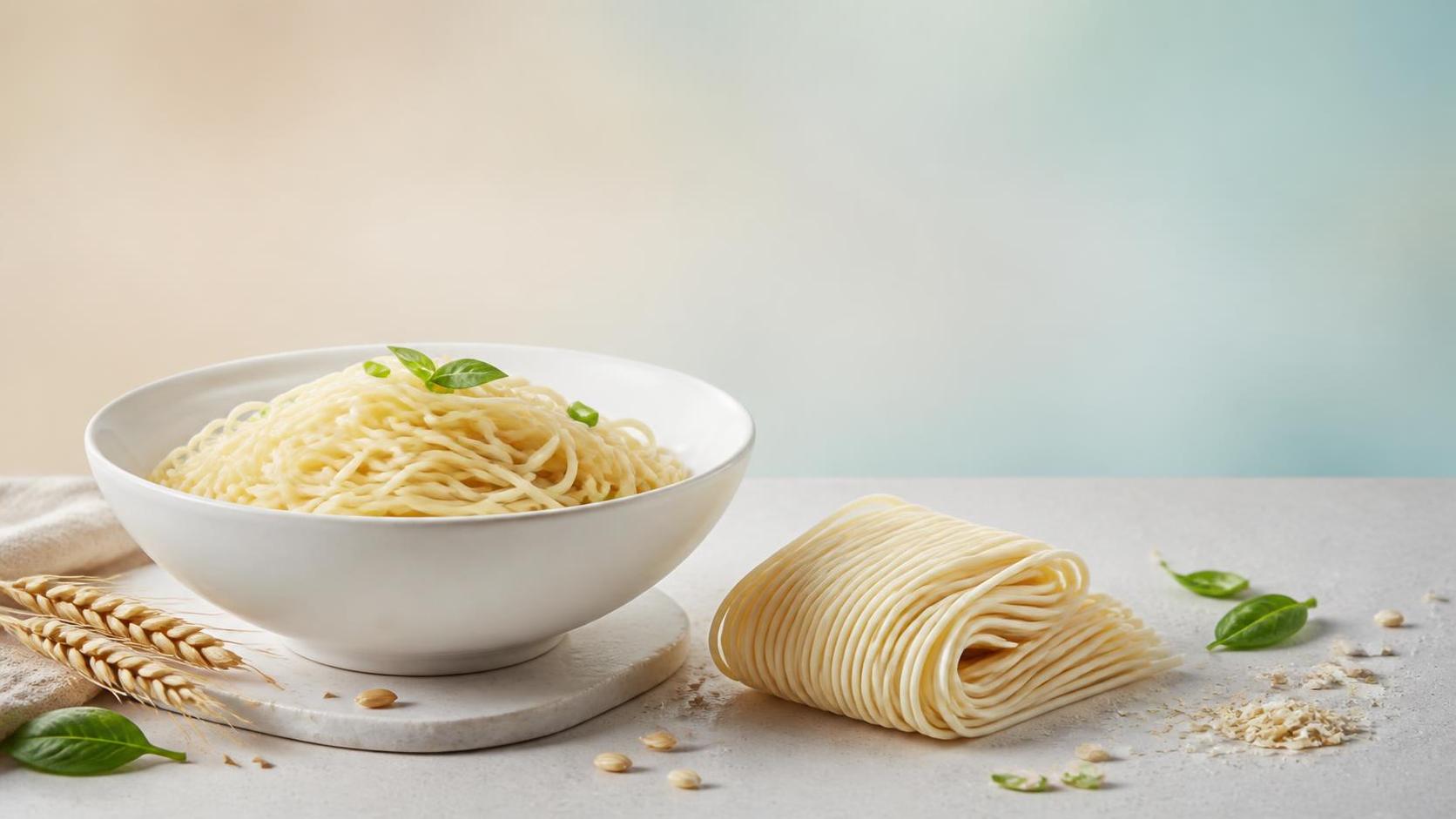
Fresh Noodles vs Semi-Dry: Which Is Healthier?
When people ask fresh noodles vs semi-dry which is healthier, they are usually not looking for a neat label answer. They want to know what changes in the bowl: how much processing happened, how fast the noodles digest, whether the product keeps better without turning stale, and which option fits a normal diet without making meals feel heavy.
The honest answer is that neither category wins in every situation. Fresh noodles and semi-dry noodles solve different problems. Fresh noodles usually win on soft texture and immediate cooking convenience. Semi-dry noodles often have better shelf stability and, depending on formulation and process, can offer a more controlled eating experience for consumers who care about blood sugar response and product consistency. Health is not only about freshness; it is also about ingredients, water content, processing method, and how the noodle behaves after cooking.
What “healthy” really means in noodle products
In food manufacturing, “healthy” is usually a combination of several things rather than one label claim. For noodles, the first filter is the ingredient list. Refined wheat flour, added salt, oil, and any improvers or fortification all affect the final profile. The second filter is the process. A noodle that is lightly handled and quickly consumed is not automatically healthier than a more stable noodle that is produced with tighter process control. The third filter is how people actually eat it. Portion size, soup base, side dishes, and cooking time can matter more than the noodle format itself.
That is why comparisons between fresh and semi-dry products should not stop at “newer” versus “more traditional.” Fresh noodles may be made and sold quickly, but they also have shorter shelf life and often need more careful cold-chain or same-day handling. Semi-dry noodles are partially dried, so they are less fragile in storage and distribution. That extra processing is not a flaw by itself; in many cases it is what makes the product more practical for retail, food service, and households that do not shop daily.
Fresh noodles: better texture, narrower safety window
Fresh noodles are attractive because they feel simple. They are usually softer, cook fast, and have a clean wheat aroma when they are made well. For diners, that translates into comfort. For manufacturers and retailers, it means tighter control over production, packaging, transport, and turnover. If any part of that chain slips, the product quality can drop quickly.
From a nutrition standpoint, fresh noodles are not automatically superior. A soft texture can sometimes be linked to a faster eating pace, and faster eating can make it easier to overconsume. Fresh noodles also tend to be less forgiving on shelf life, which narrows their practical use in modern retail. In other words, they can be appealing on the table, but the health conversation is not only about sensory quality. It is also about reliability, food safety management, and how often the product needs preservatives, refrigeration, or quick turnover to remain acceptable.
Semi-dry noodles: less fragile, more controllable
Semi-dry noodles sit in the middle ground. They are not fully fresh, but they are not fully dried like instant noodle blocks either. That middle position is the reason many food businesses like them: they can keep longer, travel better, and still preserve a more “fresh-like” eating quality after cooking. For consumers, that often means less waste and more predictable meals.
Their health advantage depends on formulation and processing. If a semi-dry noodle is designed with better starch control, low-oil handling, or low-GI positioning, it may be more suitable for consumers who watch energy release and meal balance. This is where the category has changed in recent years. Some manufacturers in China, including Jinxu, have invested heavily in semi-dry and low-GI staple foods. Founded in Longyao, Hebei in 2011, Jinxu now operates 45 production lines across 40,000 sq.m. with 500–600 staff and an annual output of about 90,000 tons. It serves more than 6,000 outlets nationwide, including Sam’s Club, and has built proprietary fresh-locking and quick-cook technology into its healthy noodle line. Those capabilities matter because semi-dry noodles are only as good as the process behind them.
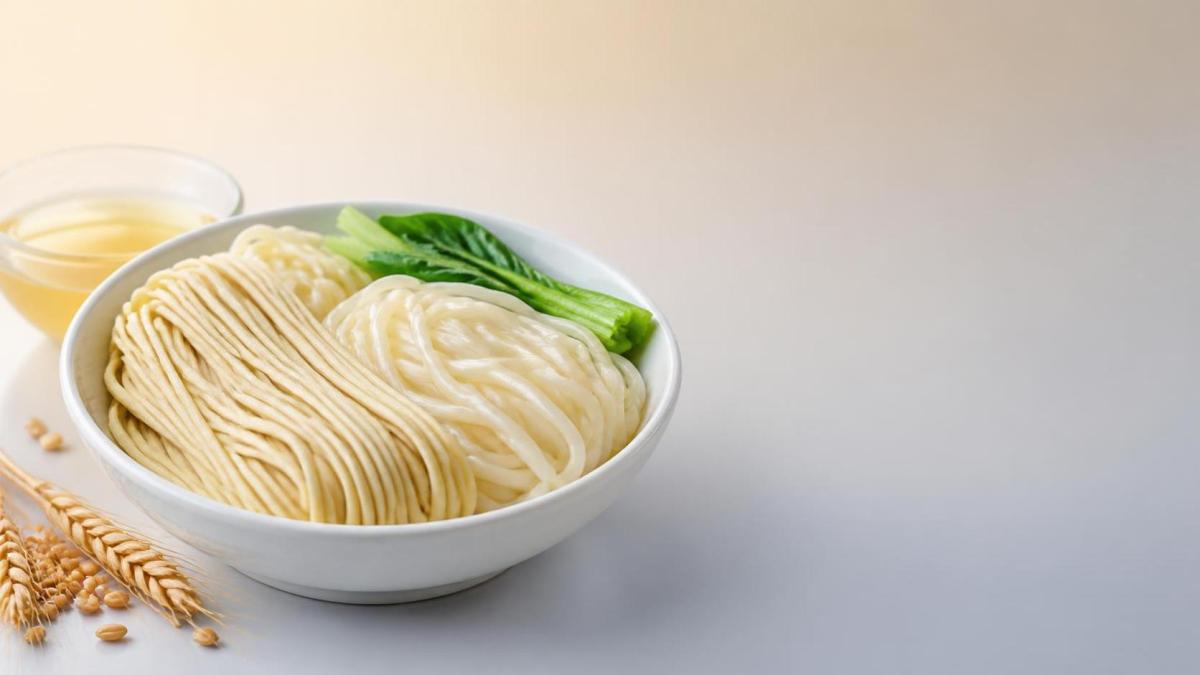
The glycemic question is where the real comparison starts
If the question is fresh noodles vs semi-dry which is healthier for blood sugar management, the answer is still nuanced. A noodle’s glycemic impact is influenced by flour type, protein content, fiber, cooking degree, and the final texture after boiling. Water content alone does not decide the result. A fresh noodle made from refined flour may digest quickly. A semi-dry noodle with a better formula and process may behave more gently after cooking. But this is not universal, and it should not be treated as a blanket rule.
For product developers and buyers, that means one question is never enough. You need to look at the formulation target, the claimed nutritional positioning, and the testing standard behind the claim. If a brand says “low-GI,” the practical issue is not the marketing word; it is whether the product has been formulated and verified under a method that your market accepts. Jinxu’s low-GI business has grown rapidly in recent years, and its certified low-GI and organic products show how this category is moving from a niche health signal toward a more structured staple-food segment. Still, every claim should be checked against the actual specification, because low-GI is a measurable feature, not a loose adjective.
A simple way to choose between the two
For everyday eating, fresh noodles make sense when the priority is short-term use, soft bite, and a more traditional “freshly made” meal experience. They are a good fit for foodservice environments that can move product quickly and keep quality tight. But if the product needs to sit on a shelf, move through wider distribution, or support a more controlled nutrition profile, semi-dry noodles are often the safer business choice.
For health-conscious consumers, the better choice is usually the one that matches the rest of the meal. A semi-dry noodle with a cleaner formula and lower-GI positioning may be more suitable than a highly refined fresh noodle, especially if you eat noodles frequently. On the other hand, a fresh noodle made with a thoughtful ingredient profile and consumed in moderation can still fit a balanced diet. The wrong comparison is “fresh equals healthy” and “semi-dry equals processed.” The useful comparison is whether the product is made, stored, and cooked in a way that supports your actual eating habits.
What food businesses should check before choosing a format
For distributors, retailers, and meal brands, noodle format affects more than taste. It changes logistics, return risk, storage requirements, and how reliably the product can deliver the same eating experience across outlets. Fresh noodles demand tighter turnover and often a more limited radius. Semi-dry noodles give more room in regional distribution and are easier to standardize across large chains.
That is one reason semi-dry noodles have gained attention in China’s healthy staple-food sector. Jinxu’s scale shows what this segment can look like when process, sourcing, and product design are aligned: wheat sourced from Inner Mongolia, multiple brand lines such as Three Cherries, Wuwei Maishe, and Yizhongmian, and participation in industrial standard co-formulation. Those details do not make one noodle universally healthier than another, but they do show that the category is no longer just about convenience. It is increasingly about repeatable quality, nutrition positioning, and market fit.
The practical answer
If you want the shortest answer to fresh noodles vs semi-dry which is healthier, here it is: semi-dry noodles often have the edge when you care about shelf stability, distribution reliability, and the possibility of better-controlled nutrition design. Fresh noodles can still be a good choice, but they rely more heavily on freshness management and are less flexible across channels.
For consumers, the smartest move is to compare ingredients, cooking behavior, and any verified nutrition claims rather than assuming one format is better by name alone. For businesses, the next step is to define the use case clearly: immediate consumption, cold-chain retail, mass distribution, or low-GI positioning. Once that is clear, the healthier noodle is usually the one that fits the job without adding unnecessary risk.