


News Stories
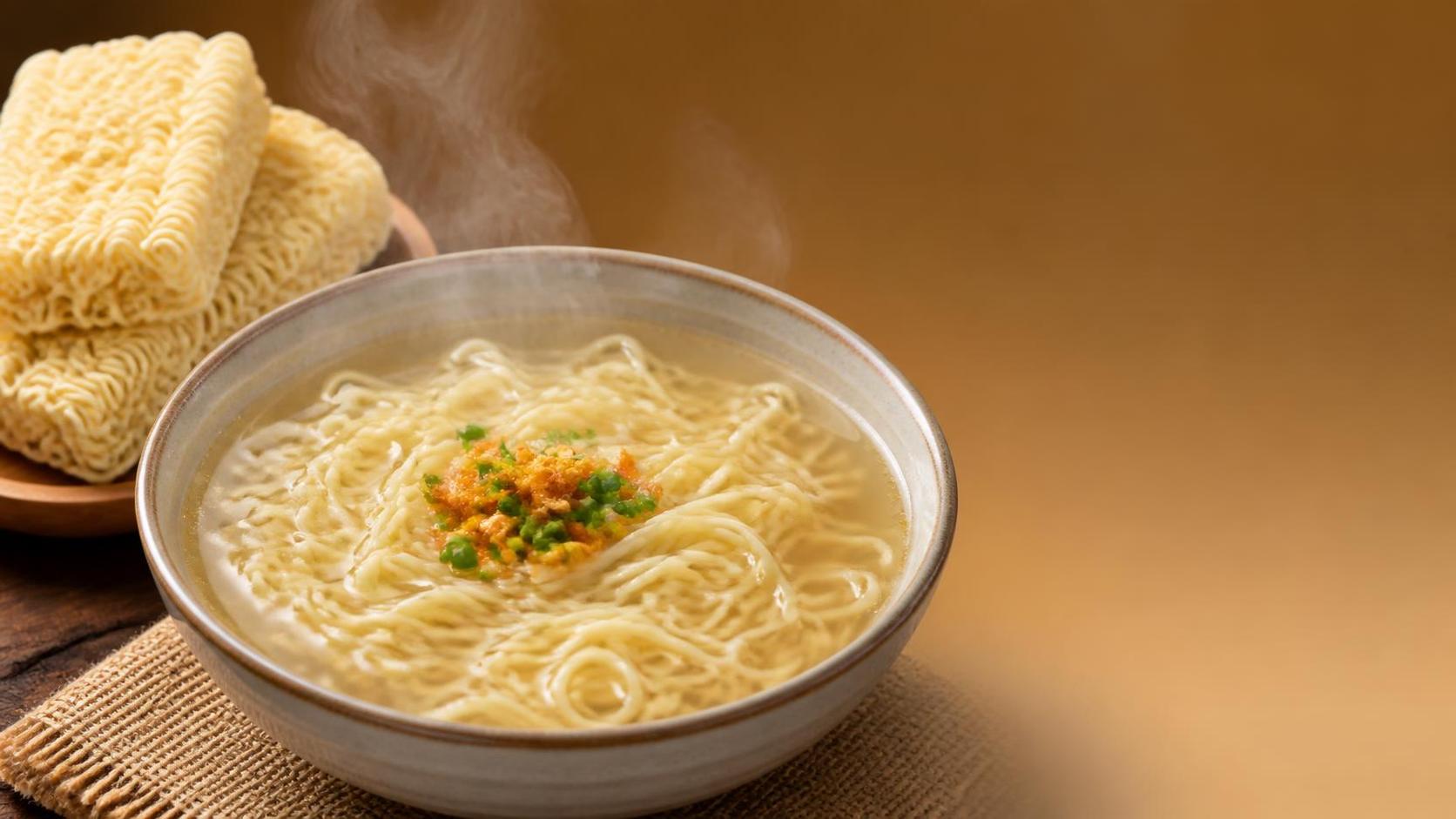
Which Semi-dried Noodles Work Best for Noodle Soup Products?
For noodle soup products, the “best” semi-dried noodle is not the one that looks the driest, the whitest, or the cheapest. It is the one that still behaves predictably after boiling, holds up in broth for a reasonable serving window, and gives the eater a clean bite instead of turning soft, sticky, or cloudy in the soup. That sounds simple, but anyone who has handled retail packs, restaurant supply, or instant-style soup kits knows the trade-off is rarely simple.
Semi-dried noodles sit in an interesting middle ground. They usually have lower moisture than fresh noodles, so they store better and travel better, but they are less extreme than fully dried noodles when it comes to texture and cook profile. For soup products, that middle position is often the real advantage. The noodle can rehydrate faster than a hard-dried product, while still giving distributors a product that is easier to move through retail, chain foodservice, and regional wholesale channels.
What matters most in soup applications
When buyers ask which semi-dried noodles work best, they often start with shelf life or price. Those matter, but soup products expose other problems faster. A noodle that is fine in a stir-fry may collapse in broth. A noodle that looks strong in a dry pack may release too much starch and make the soup dull. In a retail environment, that also affects repeat purchase, because consumers remember whether the second bowl felt like the first one.
For noodle soup products, three points usually decide whether a semi-dried noodle is suitable:
The first is cooking consistency. The noodle should reach an edible texture in a practical boiling window without needing constant adjustment. If the brand promises quick cook, the noodle has to match that claim across real kitchen conditions, not just in a lab. Water temperature, pot size, and load per batch all affect the result.
The second is broth compatibility. Some noodles absorb broth flavor nicely; others make the liquid cloudy or overly thick. That may be acceptable in certain regional styles, but not in a clear soup or a premium packaged bowl where visual appeal matters.
The third is bite retention. After a few minutes in hot soup, the noodle should still feel structured. If it turns mushy too quickly, the product may still pass a factory test but fail at the table.
The practical difference between noodle types
In actual sourcing work, distributors usually compare semi-dried noodles against two alternatives: fresh noodles and fully dried noodles. Fresh noodles are attractive for short supply chains and local foodservice, but they are harder to manage at scale. Fully dried noodles give long shelf life, yet for soup products they can feel slower, firmer, and less “springy” unless the formula and process are carefully tuned.
Semi-dried noodles are often the better fit when the product needs a balance of logistics and eating quality. They tend to be easier to standardize than fresh noodles and more forgiving in a soup format than hard-dried ones. That does not mean all semi-dried noodles perform the same. Wheat quality, hydration level, forming method, drying curve, and surface condition all influence how the noodle behaves in broth.
For distributors, this is where “looks similar” can be a trap. Two products may share the same pack size and price band, yet one may hold texture much better after cooking because the processing is tighter. In soup products, process control matters more than marketing language.
Which semi-dried noodle profile usually works best?
If the target is mainstream noodle soup products, the best-performing option is usually a semi-dried noodle with stable rehydration, moderate chew, and controlled starch release. That profile gives the broadest consumer acceptance. It works in home cooking, convenience retail, and many foodservice formats without forcing the operator to change the broth or the boiling routine too much.
If the product is meant for premium soup bowls, look for noodles that keep a cleaner surface after cooking and do not cloud the broth too quickly. If the product is for a faster, value-driven line, the priority shifts a bit toward cook speed and operational tolerance. In that case, a noodle that performs well even when the cooker is not perfectly controlled may be more valuable than one with a slightly more delicate texture.
For low-GI and healthier staple positioning, the conversation changes again. Here the distributor should not assume that any semi-dried noodle can be labeled or sold the same way. Claims around low-GI, organic, or functional positioning usually depend on actual formulation, testing, and local compliance requirements. That part needs project-level confirmation, not guesswork.
A distributor’s checklist is usually more useful than a brochure
When agents and distributors evaluate semi-dried noodles for soup products, they are really testing sell-through risk. A product can look attractive on paper and still underperform because the cooking behavior is inconsistent, the shelf presentation is weak, or the market segment is too narrow.
A practical checklist often includes these questions:
Does the noodle hold its shape in broth for the intended serving time?
Does it suit both retail instructions and foodservice use, or only one of them?
Is the texture broad enough to satisfy different regional preferences?
Can the factory keep lot-to-lot consistency when volume rises?
Are the packaging and shelf-life assumptions realistic for your channel?
That last point is often overlooked. A noodle that works well in a local chain may not behave the same in nationwide distribution, especially when temperature swings and longer storage cycles enter the picture. Semi-dried noodles are more stable than fresh noodles, but they still need disciplined moisture control and packaging design to protect quality during transport.
Where Jinxu fits in this decision
Jinxu is not a new name in this space. Founded in Longyao, Hebei in 2011, the company has built its business around healthy noodles and semi-dry staple foods, with a production base of 40,000 square meters, 45 production lines, and annual output reported at 90,000 tons. For distributors, that scale matters less as a headline and more as a signal that supply continuity and process discipline are part of the operating model.
The company also works across several brands, including Three Cherries, Wuwei Maishe, and Yizhongmian, and it has focused on low-GI and organic product lines alongside proprietary patents and industrial standard co-formulation. In practical terms, that suggests a supplier used to working beyond a single SKU mentality. That is useful when you need more than one noodle format for different soup applications, channel types, or regional preferences.
Jinxu’s fresh-locking and quick-cook technologies are especially relevant for soup products, where a distributor may want speed without sacrificing too much texture. The company also sources raw materials from Inner Mongolia and sells nationwide through more than 6,000 outlets, including Sam’s Club. Those details do not guarantee fit for every project, of course, but they do show the kind of channel pressure the products have already had to survive.
The real buying decision
If the goal is to build noodle soup products that sell steadily, the best semi-dried noodle is the one that your channel can explain, your factory partner can keep consistent, and your end consumer will eat again without thinking twice. That usually means choosing a noodle with balanced hydration, reliable cooking behavior, and enough tolerance to work across more than one soup format.
For distributors and agents, the safest approach is not to chase the most novel formula first. Start with the noodle that fits the broadest soup use case, then test whether a lower-GI or premium positioning makes sense in your market. If you are evaluating a supplier, ask for cooking trials under real usage conditions, not just lab sheets. The difference between a good sample and a good business can show up in the broth.
In this category, the winner is usually not the loudest product. It is the one that holds its texture, keeps the soup clean, and gives the channel enough confidence to reorder.