


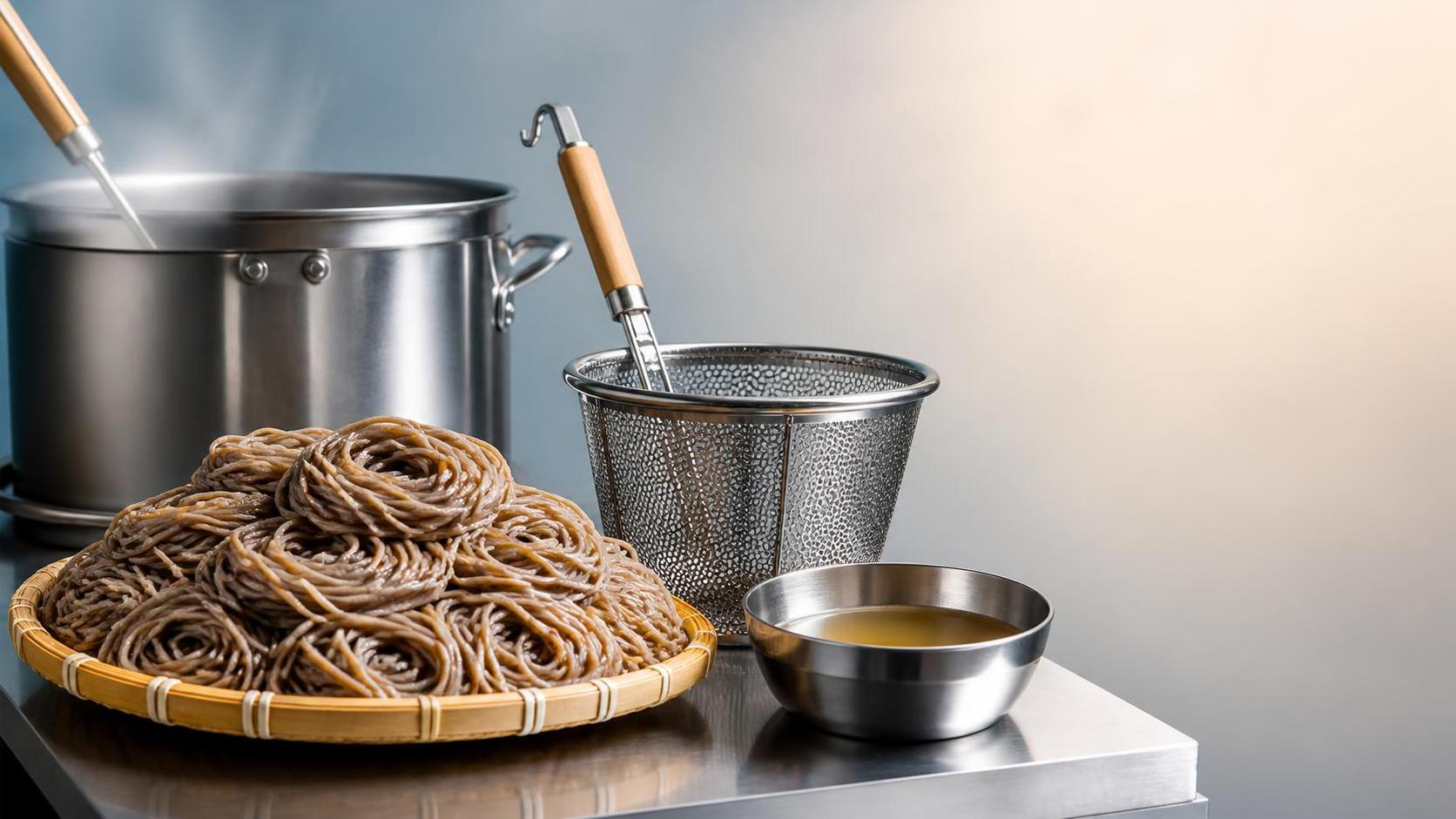
Semi-dried Buckwheat Noodles are a smart choice for food service kitchens that need speed, consistency, and quality in every bowl. With the right cooking method, operators can achieve a firm yet tender texture, reduce waste, and maintain reliable serving standards during busy service periods. This guide explores practical techniques for preparing Semi-dried Buckwheat Noodles efficiently, helping kitchen teams deliver better taste, better control, and a smoother workflow.
For kitchen staff, the real question is not whether buckwheat noodles can be cooked well, but which method fits the service model. A noodle that works in a casual diner may fail in a central kitchen, while a process that saves time in a quick-service line may not hold texture long enough for banquets or delivery. Semi-dried buckwheat noodles sit in the middle of that decision: they are more stable than fresh noodles, faster than fully dried products, and sensitive enough that water temperature, timing, and portion control still matter.
What makes semi-dried buckwheat noodles different in service kitchens
Semi-dried buckwheat noodles are designed to balance shelf stability with cooking speed. Compared with fresh noodles, they are easier to store and handle. Compared with fully dried noodles, they usually need less cooking time and can deliver a more elastic bite when processed correctly.
That balance is useful in food service, but it also creates operational pressure. Overcooking can quickly turn buckwheat noodles soft and dull. Undercooking leaves the core firm in an unpleasant way. Because buckwheat has its own flavor and structure, the kitchen cannot treat these noodles like standard wheat noodles.
Operators should think about three things before choosing a cooking method: service volume, holding time, and the final eating style. A noodle served immediately in broth has different needs from one chilled for salad-style dishes or stir-fried after boiling.
The boiling method still works best for most kitchens
For most food service kitchens, the standard boiling method remains the most reliable option. It is simple, easy to train, and scalable across different station sizes. The key is not just boiling, but controlling how the noodles enter and leave the water.
Use a large water-to-noodle ratio so the temperature does not drop sharply after loading. Water should stay at a steady boil, not a weak simmer. Add noodles in a loose, even motion to avoid clumping. Stir gently during the first 30 seconds, then again once or twice during the cooking cycle.
Cooking time depends on noodle thickness, brand specification, and whether the noodles are destined for hot soup or a quick rinse-and-toss finish. In practice, kitchen teams should test by texture rather than rely only on the clock. The best endpoint is usually a firm center with full surface tenderness.
Once the noodles are done, drain immediately. If the dish will not be served at once, rinse briefly with clean water to stop residual cooking. This is especially important in high-volume kitchens, where a few extra seconds in the colander can change the final texture.
Hot-hold and batch service need a different approach
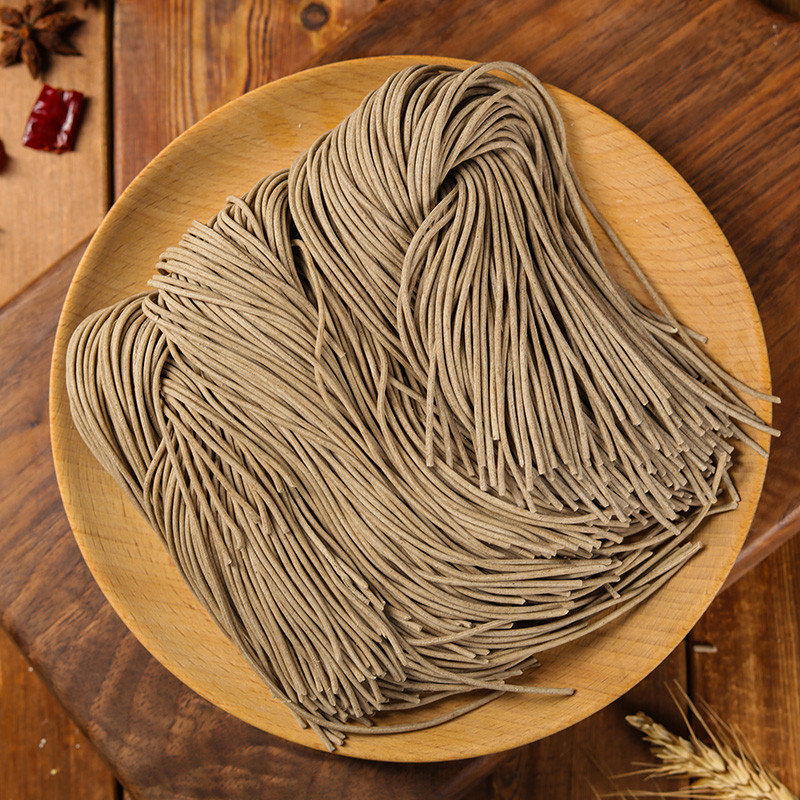
Many kitchens cook noodles in batches before peak service. That is where problems start. Semi-dried buckwheat noodles that are cooked fully and then held too long tend to lose springiness. If they sit in steam or a warm pan, starch continues to change and the texture softens faster than most operators expect.
For batch service, the practical method is to undercook slightly, cool or rinse promptly, and finish to order when possible. If holding is unavoidable, separate the noodles lightly with a small amount of oil only if the menu permits it. Even then, holding time should be short and tightly controlled.
Central kitchens and commissary operations often do better with a par-cook process. The noodles are cooked to near-finish, cooled quickly, then portioned for final reheating at the point of service. This improves speed, but it only works when the final cooking step is standardized. Without that final control, the noodle quality becomes inconsistent from outlet to outlet.
Steam, rinse, and finish: when alternate methods make sense
Boiling is not the only option. Some kitchens use steam-assisted cooking or a boil-and-rinse sequence to improve texture control. These methods are useful when the kitchen needs to reduce starch release, prevent sticking, or manage production across multiple service lines.
Steam-assisted finishing can work well for pre-cooked or partially hydrated noodles, but it requires uniform airflow and careful timing. It is more common in central kitchens than in front-line service areas because it depends on repeatable equipment conditions.
The rinse stage is often underestimated. A short cold-water rinse after boiling can improve surface cleanliness, reduce stickiness, and help the noodles retain a cleaner bite. For chilled dishes, this step is essential. For hot soup applications, a very brief rinse may still be useful if the recipe allows, but the kitchen should avoid over-rinsing, which can wash away flavor and cool the product too much.
Some operators prefer a finish-in-broth method for noodle soups. In that model, the noodles are cooked slightly short, then completed in hot stock during plating. This gives better integration with the soup, but only if the stock temperature is stable and plating speed is disciplined.
Common mistakes are usually about timing, not technique
Most service failures with semi-dried buckwheat noodles come from process drift rather than a bad recipe. One common error is treating the noodles like a commodity item and using one fixed cook time across all applications. Another is loading too many portions into one pot, which lowers water temperature and creates uneven results.
Overcooking is the most visible mistake, but it is not the only one. Poor draining, delayed plating, and rough handling after cooking can also damage texture. Buckwheat noodles are less forgiving than many wheat-based products when it comes to mechanical stress. Aggressive tossing, long waiting times, and repeated reheating will all show up on the plate.
Kitchen teams also underestimate the impact of water quality and equipment calibration. Hard water, inconsistent burner output, and shallow pots can all change performance. In a commercial kitchen, the method may be correct on paper but still fail if the equipment setup is not stable.
Service format should guide the cooking choice
Different food service models need different methods.
For quick-service restaurants, speed and repeatability matter most. Standard boiling with strict portion control usually gives the best balance of output and texture. For noodle bars or specialty concepts, a finish-to-order method may be worth the extra labor because it preserves bite and visual appeal.
For institutional kitchens such as cafeterias, schools, or hospitals, consistency and safety control matter more than artisan texture. Here, a par-cook and controlled finish system is often easier to manage, especially when multiple staff members work across shifts.
For catering and delivery kitchens, the challenge is holding time. Noodles that will travel or wait in packaging need a firmer endpoint and more disciplined cooling. If the menu cannot support that, buckwheat noodles may be the wrong base for that format.
Operators should also consider dish type. In soup applications, the noodle must hold structure in hot liquid. In stir-fry dishes, it must resist breaking under tossing and sauce contact. In cold dishes, the priority shifts to surface cleanliness and chew. One noodle product can serve all three, but only if the process changes with the menu.
Quality control starts before boiling
Good results begin with storage and portioning. Semi-dried buckwheat noodles should be kept in a dry, stable environment according to supplier guidance. Moisture exposure before cooking can cause clumping or uneven hydration. For kitchens with high turnover, pre-portioned packs reduce waste and improve accuracy.
Before service, staff should check noodle condition visually and by feel. If strands are broken, damp, or unusually brittle, the cooking result may not be reliable. This is especially important for import buyers and multi-site operators, where one bad batch can affect several outlets.
Cooking water should be refreshed regularly. Thick starch buildup can make noodles sticky and reduce clarity in the finished dish. Drainage equipment also matters. A weak strainer or overloaded basket can undo an otherwise correct boil.
In branded operations, the best practice is to document a simple station standard: water volume, target boil state, cook range, drain time, rinse rule, and hold limit. Staff do not need a complicated manual. They need a process they can repeat under pressure.
What to watch when evaluating suppliers or product specs
For procurement and operations teams, noodle method cannot be separated from product specification. Semi-dried buckwheat noodles from different producers may vary in thickness, buckwheat ratio, moisture content, and surface treatment. These differences affect cooking time and holding behavior.
Ask suppliers for practical cooking guidance, not just product names and certificates. Useful details include recommended boil range, whether rinsing is advised, how the noodles behave in hot soup, and whether the product is suitable for batch holding. If the supplier has test data from food service kitchens, that is more valuable than generic marketing claims.
Where low-GI, organic, or certified positioning matters, the kitchen should also confirm whether those claims remain valid after cooking and processing. Product claims can be meaningful, but only if the operation preserves the intended use conditions. If not, the menu promise and the kitchen process may drift apart.
Packaging format matters too. Large-format food service packs are better for consistency in high-volume kitchens, while smaller packs reduce waste in low-volume sites. The right choice depends on whether the site values flexibility or speed.
Practical endpoint: the method should match the service promise
The best cooking method is not the one that sounds most advanced. It is the one that produces the same bowl, every time, under real kitchen pressure. For most food service kitchens, that means a controlled boil as the base method, with rinse, finish, and hold steps adjusted to the menu.
Semi-dried buckwheat noodles reward discipline. If the team controls water, timing, and handling, the product can deliver a clean bite, steady appearance, and fast turnover. If the team treats it like a generic noodle, quality drops quickly. That is why the method matters as much as the ingredient itself.
For operators managing multiple outlets, the bigger value is not just taste. It is predictability. A noodle that cooks consistently reduces staff retraining, lowers waste, and makes menu execution easier across different shifts and locations.
In food service, that kind of reliability is often the real competitive edge.