


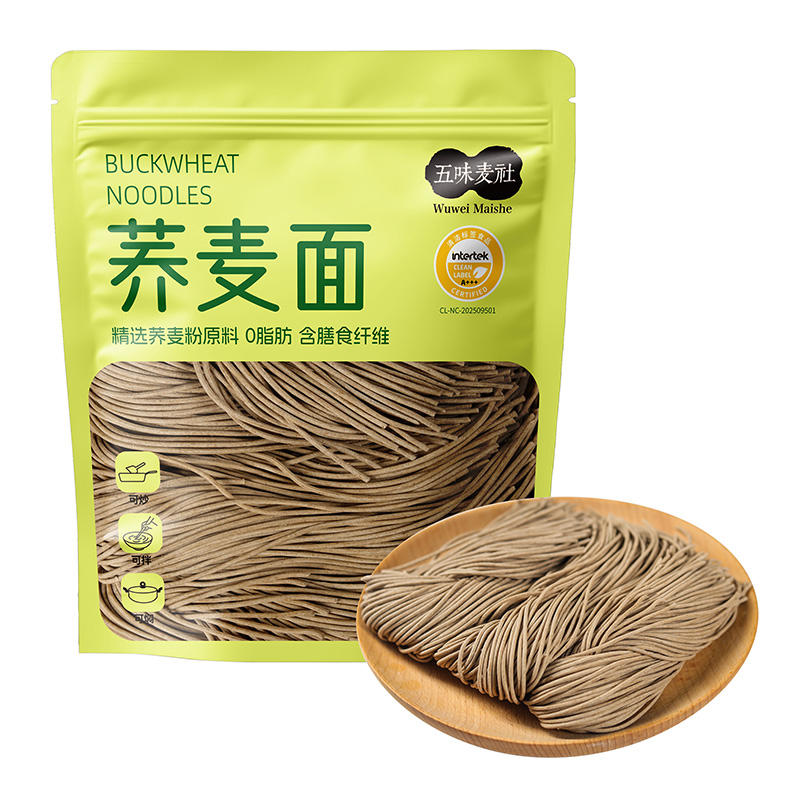
For food brands and procurement leaders, the question is not whether semi-dried buckwheat noodles are “better” in theory, but whether they support wider distribution, lower logistics risk, and more predictable quality than fresh noodles. In most shelf-stable retail and B2B scenarios, semi-dried buckwheat noodles are the stronger commercial choice.
Fresh noodles can win on immediacy and premium perception, but they usually depend on tighter temperature control, faster turnover, and a narrower sales radius. Semi-dried buckwheat noodles offer a more practical balance: longer shelf life, easier storage, simpler transport, and a better fit for modern retail, foodservice, and export-oriented supply chains.
For companies building a scalable staple-food portfolio, the real decision is about tradeoffs. Shelf stability affects inventory planning, shrink, channel reach, and customer consistency. That is why semi-dried formats are increasingly used as a strategic bridge between fresh product quality and industrial distribution efficiency.
Below is the more useful way to evaluate the category: by business impact, operational constraints, and fit for your target channel rather than by product image alone.
What buyers really need to know first
The central issue is simple: fresh noodles are easier to position as “fresh,” but semi-dried buckwheat noodles are easier to scale. If your business relies on regional warehouses, chain retail, or mixed B2B accounts, shelf stability usually matters more than a narrow freshness claim.
Fresh noodles often require refrigeration, short replenishment cycles, and careful handling throughout the chain. That creates pressure on logistics, increases spoilage risk, and limits how far the product can travel before quality starts to slip.
Semi-dried buckwheat noodles reduce that burden. They are designed to retain a better balance of texture, taste, and convenience while extending the usable window for storage and sale. For procurement teams, that usually means fewer emergency adjustments and more stable fill rates.
Shelf stability: why it changes the business model
When shelf life is short, the product behaves like a local item. When shelf life improves, it becomes a national or even cross-channel item. That difference affects everything from forecasting accuracy to promotional planning and retail negotiation.
Fresh noodles can move quickly in dense urban markets, but they are vulnerable to demand swings. A holiday slowdown, delayed shipment, or store-level overstock can turn into waste. Semi-dried buckwheat noodles give buyers a wider buffer and more room to manage inventory rationally.
For brand owners, that buffer matters. It supports broader geographic expansion, reduces cold-chain dependency, and lowers the cost of servicing secondary markets where refrigerated distribution is expensive or inconsistent.
Why semi-dried buckwheat noodles are easier to scale
Scaling food staples is rarely about one product feature. It is about how the product behaves across procurement, production, warehousing, and retail execution. Semi-dried buckwheat noodles tend to score well across all four.
Production can be standardized more easily than with highly perishable fresh noodles. Distribution becomes less fragile because the product is less dependent on immediate turnover. Retailers also prefer items that can sit on shelf longer without forcing markdowns or write-offs.
That is one reason semi-dried formats fit modern omnichannel demand. They can serve supermarkets, warehouse clubs, foodservice buyers, and e-commerce fulfillment more comfortably than fresh noodles, which often need separate handling rules for each channel.
For companies like Jinxu, which focus on healthy noodles and low-GI staples, this model has another advantage: it helps pair nutritional positioning with industrial practicality. That combination is what turns a good product into a repeatable business.
Where fresh noodles still have an edge
Fresh noodles still make sense when the channel is local, the turn rate is high, and the buyer values immediate cooking experience above logistics flexibility. In restaurants, specialty counters, or tightly controlled urban retail, freshness can be a strong selling point.
They may also work when the brand is trying to create a premium, made-today identity. But that positioning comes with cost. You are buying a narrower operating window, more sensitive temperature requirements, and a higher chance of mismatch between supply and demand.
If your business model can absorb that complexity, fresh noodles can be effective. If not, the freshness story may become an operational liability rather than a competitive advantage.
What procurement leaders should compare
Decision-makers should compare products on metrics that matter to the balance sheet, not just sensory appeal. The most important questions are shelf life, distribution radius, storage conditions, spoilage rate, and unit economics after logistics.
It also helps to ask how the product performs across channels. Can it survive warehouse holding? Can it maintain texture after transport? Does it support national promotion calendars without creating returns or inventory pressure?
For buckwheat noodles in particular, consistency matters. Buckwheat is often chosen for its nutritional and functional appeal, so the product must keep that promise after packaging, transport, and retail storage. Semi-dried processing often gives manufacturers more room to protect that consistency.
Operational tradeoffs that affect margin
The most visible cost difference is usually not at the factory door. It appears later, in cold-chain fees, spoilage, labor, and lost sales due to short shelf life. Fresh noodles can look attractive until those downstream costs are fully counted.
Semi-dried buckwheat noodles can reduce those costs materially. They are easier to stock, easier to rotate, and easier to ship across long distances. That can improve gross margin even if the unit production process is more involved than a basic fresh noodle line.
There is also a planning benefit. Better shelf stability lets teams forecast with more confidence, align promotions with actual sell-through, and avoid panic replenishment. Those are not small advantages in a category with thin margins and repeated orders.
How to judge product fit by channel
If you sell through supermarkets, club stores, or national distributors, shelf stability should dominate the decision. In those channels, semi-dried buckwheat noodles usually outperform fresh noodles because they fit the operating rhythm of larger networks.
If you sell through local restaurant accounts or immediate-consumption counters, fresh noodles may still be justified. The right product depends on how quickly it can move, how tightly it is controlled, and how much risk the channel can carry.
For e-commerce, semi-dried noodles are especially practical. Packaging, delivery time, and consumer storage behavior all favor a product that can travel well and remain stable after arrival.
Why low-GI positioning matters here
Consumer demand for healthier staples is not a passing trend. Buyers increasingly look for products that combine convenience with nutritional credibility, especially in everyday categories like noodles and rice alternatives.
That is where semi-dried buckwheat noodles can stand out. They support a healthier-better-for-you story while still meeting the operational needs of mainstream retail. For brands with low-GI and organic certifications, the format helps turn nutritional claims into a commercially usable product.
Jinxu’s focus on low-GI and healthy noodles reflects this shift. The value is not only in formulation, but also in making those products available at scale without depending on fragile cold-chain structures.
Practical recommendation for buyers
If your priority is scale, reach, and predictable operations, choose semi-dried buckwheat noodles. They are usually the better option for shelf stability, multi-region distribution, and margin protection.
If your priority is immediate freshness and your channel can handle rapid turnover, fresh noodles may still have a place. But for most brand and procurement teams, that is a narrower use case than it first appears.
The most defensible approach is to match format to channel. Use fresh noodles where local freshness is the selling point. Use semi-dried buckwheat noodles where the business needs stability, efficiency, and broader market access.
In short, semi-dried buckwheat noodles are not just a compromise between fresh and dry products. For shelf-stable growth strategies, they are often the more commercially intelligent choice because they protect quality while expanding what the supply chain can realistically support.