


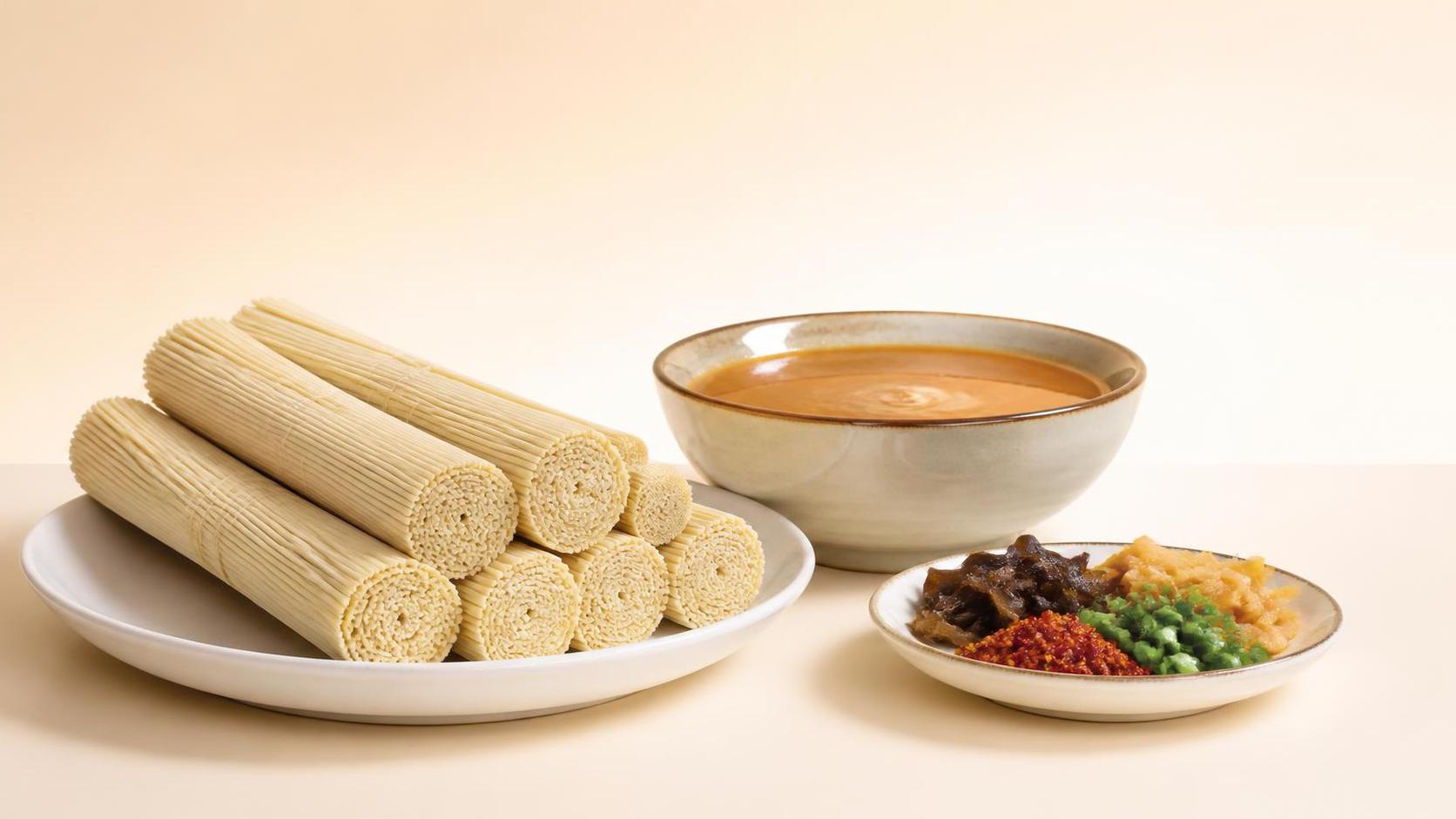
Choose semi-dried noodles first by matching the noodle body to the final eating experience. For ramen, the strand must hold broth without turning soft at the surface. For instant meals, the product has to rehydrate evenly under tight time and water-temperature limits. For foodservice, the noodle must survive holding time, batch variation, and repeated handling without breaking apart. Those three use cases overlap, but they do not tolerate the same balance of moisture, gluten strength, thickness, or drying profile.
The most useful starting point is the flour system. Wheat flour with sufficient protein is usually needed when spring, chew, and surface integrity matter, but protein alone does not tell the full story. Gluten quality, ash level, granularity, and whether the flour is blended for specific elasticity all affect the finished noodle. A flour that looks strong on paper can still produce a brittle bite if the dough is over-oxidized or the drying curve is too aggressive. Semi-dried noodles depend on controlled moisture reduction, so the flour must cooperate with the process rather than fight it.
For ramen applications, the noodle should keep a defined core after cooking. That usually means the dough has enough development to form a stable network, but not so much that the noodle becomes rubbery or dense. Thickness, cutting width, and surface finish influence how the noodle carries broth and oil. A slightly rough surface can help sauce cling in some styles, while a smoother surface may suit lighter broth profiles. If the soup base is acidic, salty, or rich in fat, the noodle’s structural margin matters even more because it will be tested over the full eating window, not just at the moment it leaves the pot.
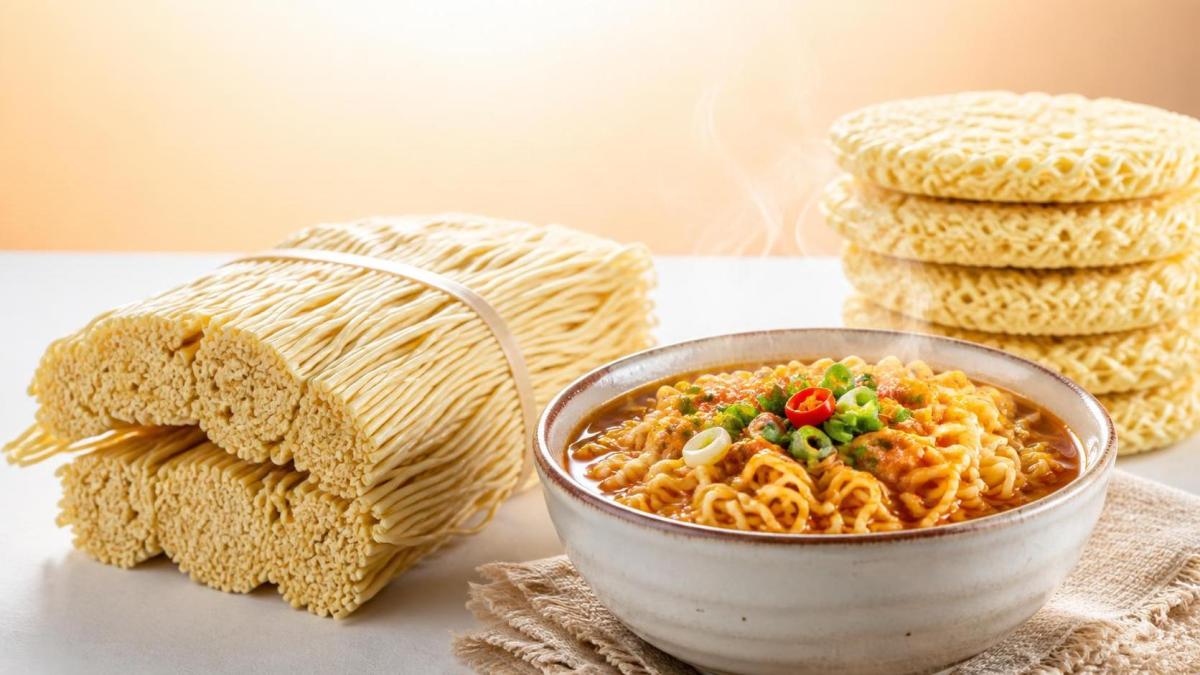
Instant meal use adds a different set of constraints. Rehydration speed is critical, but so is uniformity from piece to piece. If a noodle block contains inconsistent moisture or uneven strand density, some parts soften too quickly while others remain firm. That creates a weak consumer experience and complicates kitchen or line-side handling. Look at how the noodle behaves under the intended preparation method: cup fill, bowl fill, hot-water soak, steam-assisted reconstitution, or brief boil. A product that performs well in one method may fail in another if the drying and cutting parameters were tuned too narrowly.
Moisture control is one of the few parameters that affects both shelf stability and cooking behavior. Semi-dried noodles usually sit between fresh and fully dried products, so residual moisture must be low enough to reduce spoilage risk while still preserving a softer, quicker-cooking texture. The practical issue is consistency. Small moisture swings can change breakage during packing, caking in transport, and hydration rate in the final cook. When reviewing samples, pay attention not only to the stated moisture target but also to whether the batch feels uniform from pack to pack and within each pack.
Texture testing should be tied to actual use conditions, not only to lab-style cooking in clean water. Noodles behave differently in broth, seasoning liquids, and oil-rich systems. Salt, starch release, and temperature retention all change bite. If the noodle is meant for ramen, test it in the intended broth strength and at the holding time the kitchen or production line expects. If it is for instant meals, test it after the full fill-and-wait cycle rather than right after water addition. Many noodles look acceptable immediately and then collapse after a few minutes, which is a common sourcing mistake.
Processing method matters because semi-dried noodles depend on process control more than simple formula choice. Dough mixing time, resting, sheeting, cutting, steam treatment if used, and drying temperature profile all shape the final structure. A tightly controlled drying step can lock in a cleaner bite, but excessive heat or uneven airflow may create surface hardening before the center stabilizes. That can lead to cracking in transit or poor hydration later. Ask how the product avoids case hardening, strand adhesion, and edge drying, because those issues are often hidden until volume supply begins.
Supply stability is another screening point. A noodle that samples well once may still be unsuitable if the producer cannot hold the same cutting width, moisture level, or cooking response across repeated runs. For foodservice and industrial use, small changes become operational problems. Slightly longer cook times can break station rhythm. Slightly softer noodles can fail in warm holding. Slightly different strand diameter can change yield and portion count. Consistency is not a vague quality claim; it is the difference between a workable ingredient and one that forces constant adjustment.
Packaging and transport conditions deserve attention because semi-dried noodles are more sensitive than fully dried products. Compression during stacking, moisture migration in humid shipping environments, and temperature swings can all affect breakage and clumping. The pack structure should protect strand integrity without introducing excess material that complicates storage. For larger-volume use, the outer carton and inner pack should support fast warehouse handling and reduce damage during repeated movement. If the noodle is sold in multipack formats, inspect whether the inner packs remain sealed cleanly after handling, since minor seal weakness can matter in humid distribution routes.
Ingredient labels also reveal how much process support the noodle needs. Emulsifiers, salt, alkali, starches, and hydrocolloids may be used for texture control or cooking tolerance, depending on the target product style. None of these ingredients is automatically good or bad; the question is whether they fit the eating profile and operational window. A noodle with too much formulation support can lose the wheat character expected in ramen. A noodle with too little support may look clean but fall apart during service. The right formula is the one that matches the use case with the least unnecessary intervention.
For soup-based applications, absorption and swelling behavior deserve more attention than raw firmness alone. A noodle that absorbs water too quickly can lose edge definition and cloud the broth. A noodle that absorbs too slowly may leave a stiff center and force longer cook times, which is difficult in quick-service settings. A balanced product should hydrate through the full strand without turning slack on the outside. That balance often depends on the interaction between dough development, strand geometry, and drying depth rather than any single spec on its own.
Yield and portion control should be tested before placing any large order. A noodle that seems economical by weight may not be economical in use if it expands excessively, tears during handling, or requires overportioning to satisfy plate appearance. On the other hand, a denser noodle that holds shape well can create better serving consistency even if the pack price is not the lowest. Procurement decisions usually fail when they focus only on purchase cost and ignore service yield, preparation loss, and complaint risk.
When comparing samples, use the same cooking setup, the same resting time, and the same broth or sauce system each time. Then look for strand separation, center texture, surface stickiness, and how the noodle changes after several minutes. If the product is for hot-hold service, repeat the test after holding. If it is for instant meals, repeat it after the water draw-off or soak interval the product will actually face. Small deviations in those tests are often more informative than broad claims about premium texture.
Semi-dried noodles are a practical fit when the product needs a middle ground between fresh appeal and shelf-stable handling. The best choice is the one whose flour, moisture profile, cutting geometry, and drying behavior all align with the final use. For ramen, the priority is structural bite in broth. For instant meals, it is predictable rehydration. For foodservice, it is consistency under pressure. A sample that works only in ideal conditions is not enough; the real test is whether it keeps performing in the conditions it will actually face.